Monday, January 21, 2013

French February


O, from Délaissé, is hosting a French February event for The Classics Club and I’ve decided to participate. There are two options: either a group read of Les Liaisons Dangereuses by Pierre Ambroise Choderlos de Laclos or to read one or more novels by French authors. I think I’m going to go with the first option. I could read more books but since I really want to read them in French (and I don’t read French as fast as Spanish or English), I know is going to take more time than usual and I rather commit to just one book.

I’m about to finish A Moveable Feast and I’m kind of in the mood for all things French, so this event is perfect for me. 

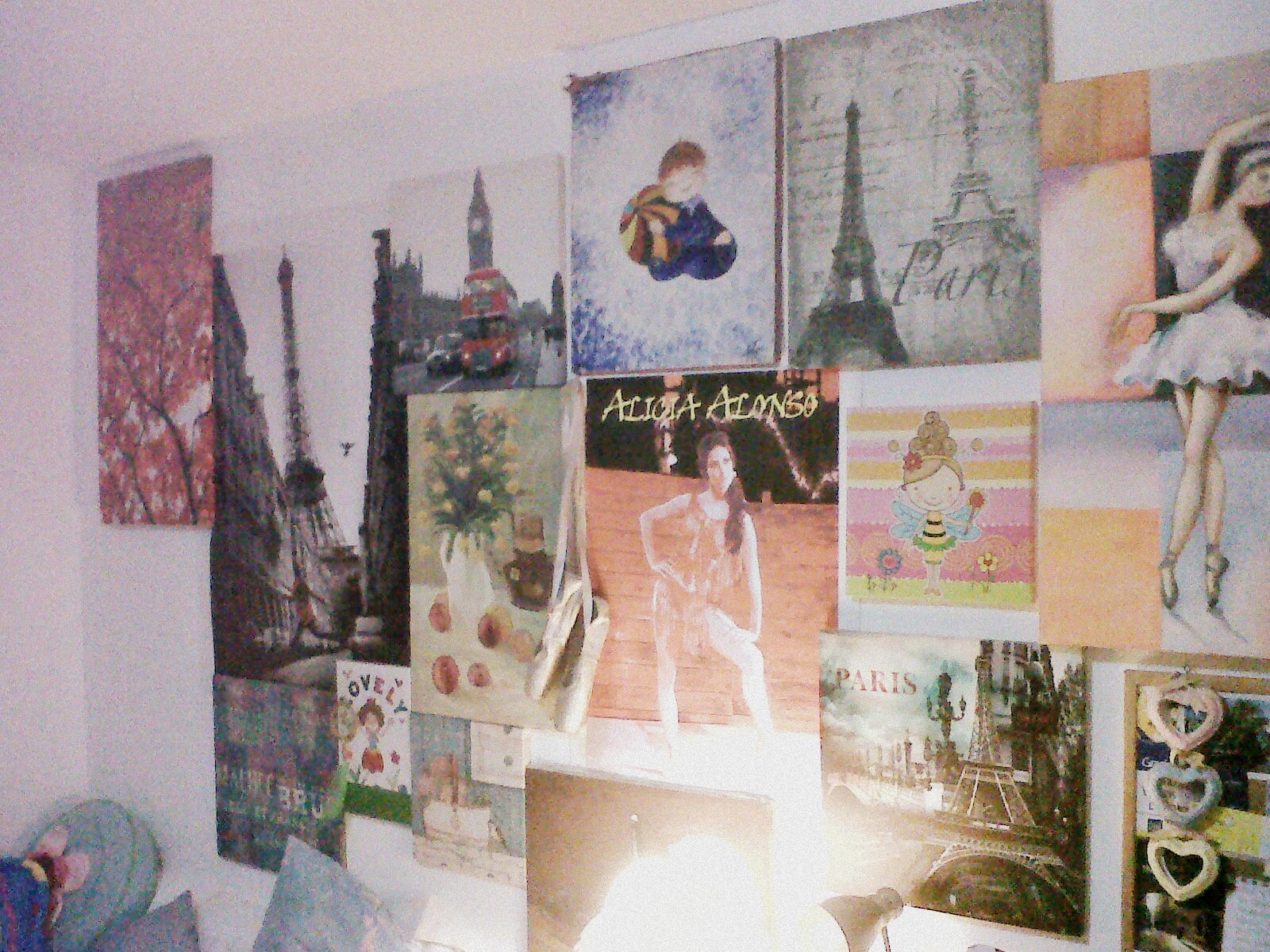
I’m a little bit obsessed with Paris, even though I have never been there. I went to Europe a couple of years ago but didn’t make it to Paris because I would have had to go alone and where’s the fun in that? I’m actually glad I didn’t go then so that I can make better plans for next time. 


(My bedroom wall obsessing about Paris...and London, ballet and other stuff)

Anyway, I’m looking forward to reading Les Liaisons Dangereuses and if I have time, maybe I can start with another French novel.

Salut!


Wednesday, January 16, 2013

A Woman of No Importance - Oscar Wilde


I really like Oscar Wilde. I have enjoyed all the plays and stories I have read from him. Unfortunately, I didn’t like A Woman of No Importance as much as I liked his other work.

It is not that I disliked the play, it had fun dialogue and witty banter but I thought it was just not as good as I expected and the only expression that comes to mind to describe how I felt when I finished reading it, is “meeehhh”.

I know, I should not use “meeehh” to describe anything in a review, but that is exactly what I said out loud in the last page.

The plot has everything one could expect from an Oscar Wilde play. It has dark comedy; it mocks the upper class of Victorian England and has great dialogue.  

[Spoiler Alert!] Lord Illingworth discovers that his young secretary is in fact the son he abandoned. He sees his formed lover, Mrs. Arbuthnot, for the first time after twenty years and she obviously resents him. They both realize that their past is catching up to them and it is inevitable for their son, Gerald, to discover the truth. 

The play highlights the position of women at the time, specially related to pre-marital relations and having children outside the marriage. One could say it is a feminist work. It certainly shows how a woman’s life was ruined when she became pregnant before getting married, while a man could continue as if nothing had happened. I could definitely perceive what Wilde thought of these conservative conventions and prejudices and how unfair women were treated.

I think this is a  story that has been told many times before, in Wilde's plays as well. Despite of that, I can’t help feeling that something is missing. There are all these characters: Mrs. Allonby, Mrs. Lady Hunstanton, Lady Pontefract, the Archdeacon, Lady Stutfield, Mr. Kelvil, etc. They all represent different sides of the Victorian upper class society, which Wilde mocks so very much, but aside from that I can’t actually see any other purpose for them in the story. Maybe there’s something I’m not getting, my own context being so far away from England, even more from Victorian England, that I might be missing some “inside joke”.

There is a lot of talking before the climax of the play arrives and even then I found it rather dull and forced. I hated when Gerald tried to convince his mother to marry Lord Illingworth. The drama created after Gerald discovered the truth seems forced and unnatural. Honor is an important thing but how much of an idiot you have to be to try to convince your own mother to marry the man that treated her and her child like trash. Or maybe that is what Wilde was trying to portray, the absurdity of the social conventions people had to live with.

On the other hand, there are some remarkable moments that I did enjoy, for example:

“Men always want to be a woman’s first love. That is their clumsy vanity. We women have a more subtle instinct about things. What we like is to be a man’s last romance”.

“One has never heard his name before in the whole course of one’s life, which speaks volumes for a man, nowadays”.

That is obviously brilliant writing. A Woman of No Importance is not a bad play, according to my humble opinion, it is a good play. But after what I have already read from Oscar Wilde, good is definitely not what I expected. I might sound like my former ballet teacher, but I was not expecting good, I was expecting great.

And now here I am feeling like an idiot for criticizing the work of one of the greatest playwrights ever.

I recommend this play to those who love Wilde and have read his other work before. To those who haven’t read anything from him, I suggest starting with The Importance of Being Earnest, An Ideal Husband or The Picture of Dorian Gray.


Wednesday, January 9, 2013

The Woman in White - Wilkie Collins


This is my first review since I joined The Classics Club, yay! 

I think I chose a great book to start this year. I’m a big fan of detective and suspense stories (I think they were called “sensation novels” at the time this book was written) but I’m also very hard to please when it comes to them. I’m very happy to say that this is one of the best I have ever read. 

The Woman in White was written by Wilkie Collins in 1859. It tells the story of a horrible conspiracy full of mystery, secrets, danger, love and all the ingredients you could look for in a Gothic-style suspense novel.

I’m not going to spoil the story for those who haven’t read it yet. Walter Hartright is a drawing teacher who meets a mysterious woman dressed in white. He helps her to reach safety and doesn’t expect to ever see her again. He takes a job and moves away from London and as new and exciting events start to unfold, the woman in white appears in the story as the key to solve everything.

I really like that the story was written similar to an epistolary novel. The different styles, tones and points of view of the different people narrating it really made the book so much more interesting.  I loved Miss Halcombe’s part of the story; I think is the most accomplished part of the book. I became so involved in this part that I gasped and said “Nooooo!” out loud many times while reading the extracts of her diary. 

I very much enjoyed Mr. Fairlie’s character, even though he is an obnoxious man. It was really fun actually hearing him speak in my mind, with his affected manners and constantly posing as the victim of absolutely everything and everyone. He is positively ridiculous and I admit I laughed with his absurdities.

Count Fosco’s character is also very interesting. He could be extremely joyful, amiable and sensitive and also Machiavellian, cold and cynical. He is the one person of this whole story that I would be actually terrified to meet. 

I didn’t like Laura Fairlie’s character, too much of a damsel in distress for me, the exact opposite of her sister, Marian Halcombe. It seemed to me that Laura’s participation throughout the story was limited to crying, panicking and being taken care of by Marian and Walter. I also hated Madame Fosco’s robot-like manners. She remembered me of radical religious fanatics, but instead of being obsessed with religion or God, she was obsessed with her husband. 

There are some very surprising turns of events and up to the final pages of the book, the future of the main characters is uncertain. 

I must say, even though I admired how everything was explained, that every piece of information had its purpose and that at the end of the book we understand absolutely everything that happened, up to the last detail, I didn’t exactly like the way the solution was obtained. I have to be ambiguous here to avoid spoiling the story, but I was hoping that some public punishment or justice would be made and that is incomplete, in my opinion.

In conclusion, I definitely recommend the book. It is one of the best suspense novels I’ve read in a long time, very well thought of, with every little detail having a purpose. It is a real page-turner and I understand why it was called a sensation novel. It really catches the reader and doesn’t let go until the mystery is discovered. 

Friday, January 4, 2013

List of books for The Classics Club


You might be wondering why I am writing this post in English. Well, I've decided to join The Classics Club, a community of people committed to reading 50 classics or more in a period of five years. The main requirement for this club is to write a review of each classic we read. I have decided to write them in English to actually be able to share them with the members of the club; therefore, this blog is now bilingual. I will continue to publish posts in Spanish for the books that don't belong to this list, but the posts for the club will be in English. I plan to translate the reviews of Spanish classics and other reviews I consider necessary (reviews of books I have really loved, for example).

The list of books is very similar to my 2013 reading challenge list. The difference is that for the classics club I added books I have already read but haven’t reviewed yet and eliminated books I don’t consider classics. 

My goal date is January, 2018. 

So without much further ado, here’s my list of classics to read in the next five years:

Brecht, Bertolt
Trommeln in der Nacht
Bronte, Anne
The Tenant of Wildfell Hall
Bronte, Charlotte
Jane Eyre*
Bronte, Charlotte
Villete
Bronte, Charlotte
Bronte, Emily
Shirley
Wuthering Heights*
Browning, Elizabeth
Aurora Leigh
Camus, Albert
The Plague
Chordelos de Laclos, Pierre
Collins, Wilkie
Les Liaisons Dangereuses
The Woman in White
Conan Doyle, Arthur
The Complete Sherlock Holmes Novels (4 books)
Conan, Doyle Arthur
Cortázar, Julio
The Complete Sherlock Holmes Short Stories (56 short stories)
Rayuela (Hopscotch)*
de Balzac, Honoré
Eugenie Grandet
de Maupassant, Guy
Une vie
de Maupassant, Guy
Bel-Ami
Dickens, Charles
A Tale of Two Cities
Dickens, Charles
Great Expectations
Dickens, Charles
Dostoevsky, Fyodor
Bleak House
The Brothers Karamazov
Dostoevsky, Fyodor
Crime and Punishment
Dumas, Alexandre
The Count of Monte Cristo*
Dumas, Alexandre
The Three Musketeers
Eliot, George
Middlemarch
Eliot, TS
Murder in the Cathedral
Faulkner, William
As I Lay Dying
Fitzgerald, F. Scott
The Great Gatsby*
Flaubert, Gustave
Madame Bovary*
Fuentes, Carlos
The Death of Artemio Cruz
García Márquez, Gabriel
A Hundred Years of Solitude*
García Márquez, Gabriel
Love In The Time of Cholera*
García Márquez, Gabriel
Chronicle Of A Death Foretold*
Gaskell, Elizabeth
North and South
Grass, Gunter
Danziger Trilogie
Hawthorne, Nathaniel
The Scarlett Letter
Hemingway, Ernest
A Moveable Feast
Hemingway, Ernest
The Sun Also Rises
Hemingway, Ernest
Hesse, Hermann
A Farewell to Arms
Steppenwolf
Hodgson Burnett, Frances
The Secret Garden
Hugo, Victor
Les Miserables
Hugo, Victor
The Hunchback of Notre Dame
James, Henry
The American
James, Henry
Washington Square
Kerouac, Jack
On the Road
Lee, Harper
To Kill a Mockingbird
Mann, Thomas
The Magic Mountain
Nabokov, Vladimir
Lolita
Onetti, Juan Carlos
La vida breve (The Brief Life)
Orwell, George
1984
Poe, Edgar Allan
The Complete Works of Edgar Allan Poe (Vol. I, II, III and IV)
Richardson, Samuel
Clarissa
Radcliffe, Anne
Rulfo, Juan
The mysteries of Udolpho
Pedro Páramo
Scott, Walter
The Waverley Novels
Shakespeare, William
As you like it
Shakespeare, William
The Merchant of Venice
Shakespeare, William
The Tempest
Shakespeare, William
The Winter's Tale
Shakespeare, William
Hamlet
Julius Caesar
Shakespeare, William
Macbeth
Shakespeare, William
King Lear
Shelley, Mary
Frankenstein
Thackeray, William
Vanity Fair
Tolkien, J.R.R.
The Hobbit
Turgenev, Ivan
First Love
Vargas Llosa, Mario
Conversation in the Cathedral*
Vargas Llosa, Mario
The Time of the Hero*
von Goethe, Johann Wolfgang
Faust
Wharton, Edith
Wilde, Oscar
The House of Mirth
A Woman Of No Importance
Woolf, Virginia
Mrs. Dalloway*
Woolf, Virginia
A Room of One's Own*
Woolf, Virginia
Night and Day
Woolf, Virginia
The Waves
Woolf, Virginia
To The Lighthouse
Zola, Emile
Nana


The asterisks indicate the books I will be rereading for the Club.